NRL Finals Season: Is Your Club Ready for the Biggest Game-Day Crowds of the Year?
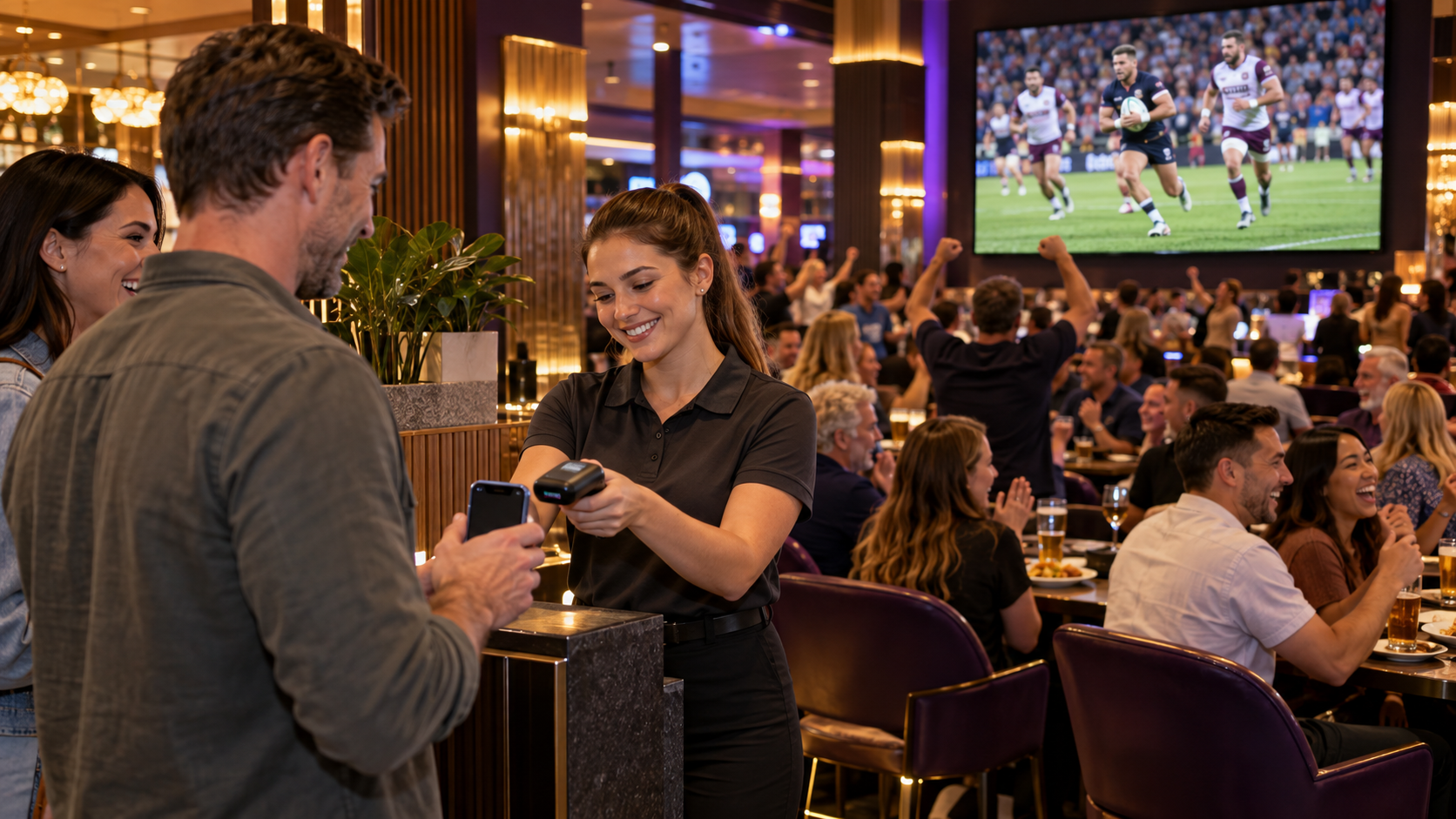
NRL Finals season can turn an ordinary weekend at the club into one of the busiest nights on the calendar.
The screen gets bigger. Tables fill faster. Members bring friends. Dining, bars and function spaces become busier, while staff suddenly need to manage reserved tickets, member pricing, walk-up sales, guest lists and hundreds of arrivals within the same short window.
For clubs planning NRL club events across Australia, the question is not simply whether people will turn up.
It is whether your event operation is ready when they do.
That question matters even more this season. According to the NRL’s 2026 regular-season crowd and viewership figures, more than four million spectators attended matches during the regular season, while more than 150 million viewers tuned in throughout the year.
The 2026 season became the competition’s most-watched season on record, reinforcing just how much attention major rugby league fixtures can generate.
Your club does not need tens of thousands of people through the doors to experience that pressure.
For a function room designed for 300 guests, an additional 100 people arriving shortly before kick-off can be enough to expose every manual process your team has been working around all year.
NRL Finals Are Not a Normal Club Event
Finals events concentrate demand into a very short period.
Unlike a conference or function where guest arrivals may be spread across an hour, an NRL watch party can have hundreds of people wanting to enter, order food, buy drinks and find their seats shortly before the game begins.
Depending on the event, your team may also be managing:
- member and non-member tickets
- reserved and general admission areas
- dinner-and-game packages
- VIP or sponsor allocations
- promotional codes
- complimentary tickets
- late online bookings
- walk-up ticket sales
- attendee check-in
- capacity limits
- multiple entry points.
None of these processes is particularly difficult in isolation.
The challenge comes when they all happen at 7:15 pm.
That is why effective club event ticketing in Australia should be about more than putting tickets online.
The technology needs to help clubs manage the entire journey from booking through to game-day entry.
Finals Events Can Support a Bigger Commercial Goal
Strong NRL Finals attendance is not only an event-management opportunity.
It can support a much broader priority for Australian registered clubs: strengthening non-gaming revenue while keeping operating costs under control.
The latest ClubsNSW Industry Snapshot Report shows that non-gaming activities account for around 55% of club revenue, while salary and wage expenses remain the largest cost item at 43%. ClubsNSW also notes increasing pressure on clubs to diversify revenue and improve operational efficiency.
That makes major club events commercially important.
A successful Finals night is not simply about selling a $20 ticket.
It can mean:
- more restaurant covers
- increased bar trade
- stronger member engagement
- new visitors entering the venue
- repeat attendance
- premium hospitality sales
- another reason for members to choose the club for major sporting occasions.
But if every increase in attendance also means more spreadsheets, extra manual member checks, additional queues and more staff administration, some of that value disappears.
A better question for clubs is:
How much more event demand can your existing team manage without creating significantly more work?
1. Encourage Supporters to Book Before Game Day
Walk-ups will always be part of major club events.
They just should not be the only way you know how many people are coming.
Advance ticketing gives club teams a much earlier picture of demand and can make it easier to plan:
- staffing
- catering
- room configuration
- seating
- security
- entry points
- food and beverage requirements.
It also allows clubs to create ticket options around different audience needs.
For example:
Member Entry
Access available to eligible club members.
General Admission
Standard entry for guests and non-members.
Dinner + Game Package
Event entry bundled with dining or beverage inclusions.
VIP Viewing Package
Premium seating or access to a dedicated function area.
Family or Group Ticket
A bundled ticket for households or larger bookings.
With Sticky Tickets ticket type and event capacity settings, clubs can create different ticket categories and control where those tickets are available for sale, including online and through the event-day Check-In App.
For clubs running multiple event formats, Sticky Tickets supports different ticket structures including single, group and reserved seating options.
That means the ticketing setup can reflect how the club actually wants to run the event rather than forcing every guest through the same booking process.
2. Move Member Verification Away From the Front Door
Member events create another operational challenge.
Who qualifies for the member price?
Is the membership still active?
Can that member access a particular ticket type?
Can they purchase tickets for guests?
Does someone at reception need to manually check every membership card?
At low volume, manual verification may seem manageable.
During a major NRL Finals event, it can quickly create a bottleneck.
Sticky Tickets membership integrations for clubs and associations allow eligible members to be recognised during the ticket-purchasing process, helping clubs provide member discounts or restricted ticket access before the attendee reaches the venue.
Sticky Tickets also offers live integrations with IGT, Aristocrat and eBet, allowing the platform to securely query an existing membership database to validate eligible members.
For clubs using another membership database, the Sticky Tickets membership integration tools can also support uploaded member information and tier-based ticket discounts.
This moves part of the verification process from the entrance to the booking stage.
That can mean fewer repetitive checks for staff when the venue is at its busiest.
There is already a relevant club-industry example.
In the CMAA and Sticky Tickets case study, the Club Managers’ Association Australia describes how centralised event registrations, member pricing and automatic membership verification helped reduce manual administration and improve its event workflow.
For registered clubs running frequent member events, that same principle can apply well beyond Finals season.
3. Prepare for Walk-Up Ticket Sales Without Creating Another System
Not everyone will book in advance.
A member might bring two extra friends.
Someone might see the atmosphere inside the club and decide to stay for the game.
A family might make a last-minute decision at 6:30 pm.
Those sales are valuable.
They just should not require a completely separate workflow.
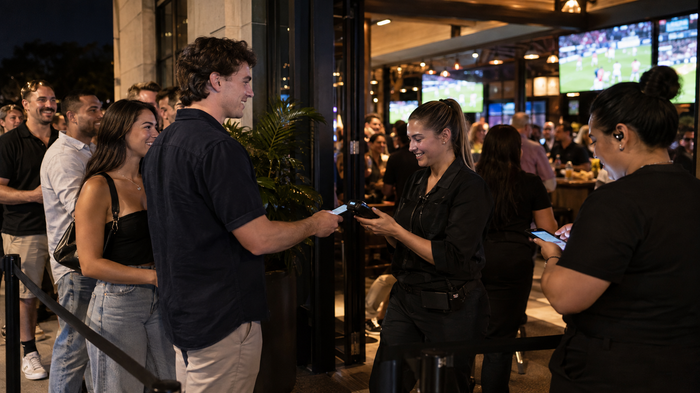
The Sticky Tickets POS device for event-day ticket sales allows organisers to sell tickets at the door, accept on-the-spot card payments, scan tickets and access guest lists using the same handheld terminal.
That makes walk-up ticket sales part of the existing event operation rather than an improvised process sitting beside it.
Instead of:
payment at one desk,
a handwritten guest name at another,
and a separate staff member trying to work out whether the attendee has actually been checked in,
the sale can remain connected to the event ticketing workflow.
For high-demand NRL Finals club events, that difference becomes increasingly important as queues grow.
The fewer steps staff need to complete for every attendee, the easier it becomes to keep people moving.
4. Design Check-In Around the Rush Before Kick-Off
Fast event entry is partly a technology question.
It is also a planning question.
If most guests arrive during the 20 minutes before kick-off, one scanning device at a single entrance may not be enough.
The Sticky Tickets event Check-In App allows staff to scan ticket barcodes from iOS and Android devices, search for guests manually and operate several check-in devices simultaneously.
For larger events, clubs can therefore create several entry lanes instead of sending everyone through the same queue.
A simple Finals-night setup might include:
Lane 1: Pre-purchased tickets
Ticket ready on the guest’s phone. Scan and enter.
Lane 2: Guest-list support
For attendees who cannot find their booking, need their name searched or have another ticket issue.
Lane 3: Walk-up ticket sales
A dedicated POS terminal for guests purchasing tickets at the venue.
The platform can support the process, but the operational plan still matters.
Before doors open:
- charge scanning devices
- allocate operators
- test ticket scanning
- confirm the correct event has been downloaded
- brief staff on ticket types
- identify who handles ticketing exceptions
- make sure support enquiries are moved away from the main queue.
Sticky Tickets also allows organisers to assign dedicated event check-in operators so staff access can be configured ahead of event day.
Technology should support the entry plan.
It should not become the entry plan.
5. Do Not Let Mobile Reception Become Your Game-Day Weak Point
Busy venues can put extra pressure on mobile connectivity.
A ticketing process that relies entirely on a perfect internet connection may create unnecessary risk at the exact moment the front entrance is busiest.
The Sticky Tickets Check-In App includes an offline mode that can continue recording ticket check-ins after event information has been downloaded to the device. Once connectivity returns, check-in information can sync with the event database and other devices.
That can be particularly useful for clubs where:
- reception varies between function spaces
- temporary entry points are used
- crowds place pressure on local connectivity
- outdoor areas form part of the event setup.
It is a small operational consideration until the Wi-Fi stops working five minutes before kick-off.
Then it becomes a very important one.
6. Know What Is Happening While the Event Is Happening
A “sold out” message tells you how many tickets were purchased.
It does not necessarily tell you how many people are currently inside the club.
During high-demand events, teams benefit from being able to see:
- tickets sold
- guests checked in
- outstanding attendees
- ticket-type attendance
- remaining event capacity.
The Sticky Tickets check-in summary and attendance tools show checked-in versus unchecked tickets and provide a breakdown across different ticket types.
That gives event teams information they can actually use while the event is running.
If almost everyone has already arrived earlier than expected, staff might be redeployed elsewhere.
If a large proportion of ticket holders are still outstanding shortly before kick-off, keeping more staff at the entrance may make sense.
If one ticket category is arriving much faster than another, teams can respond accordingly.
Event data becomes much more valuable when it helps teams decide what to do next rather than simply becoming a report opened several days later.
7. Build an Event Process That Works After Finals Season Too
NRL Finals may create the immediate demand.
But for registered clubs, the bigger value comes from creating a process that can be repeated across the entire events calendar.
Club teams may be managing:
- Grand Final functions
- Melbourne Cup events
- live entertainment
- conferences
- training
- Christmas functions
- member draws
- community events
- New Year’s Eve
- awards nights
- fundraising events.
The CMAA events calendar itself demonstrates the frequency and variety of events taking place across Australia’s club-management sector, from conferences and training to zone meetings and networking events.
Your staff should not have to rebuild the operational process for each one.
A reusable club-event workflow can mean:
ticket structures are planned consistently,
member access happens during booking,
walk-up sales use the same event system,
check-in staff use the same process,
and sales and attendance information stays connected.
That is where club event technology starts reducing administration instead of simply digitising it.
Is Your Club Finals-Ready?
Before your next NRL Finals function or major sporting event, ask:
Capacity
Do we know exactly how many people the event space can accommodate?
Ticket types
Are member, guest, dining and premium offers clearly separated?
Member access
Can eligible members receive the appropriate ticket or price without staff manually verifying every booking?
Advance sales
Are we encouraging attendees to book before game day?
Walk-ups
Can someone arrive without a ticket, pay and enter through a simple process?
Check-in
Do we have enough devices and operators for the busiest arrival period?
Exceptions
Is there a separate process for people who cannot locate their tickets or booking?
Connectivity
Can check-in continue if reception becomes unreliable?
Visibility
Can the team see attendance information while the event is running?
Post-event reporting
Will we have useful sales and attendance data to improve the next event?
If several answers are “not really”, Finals season may be a good time to revisit the setup.
The Biggest Game Should Not Create the Biggest Admin Headache
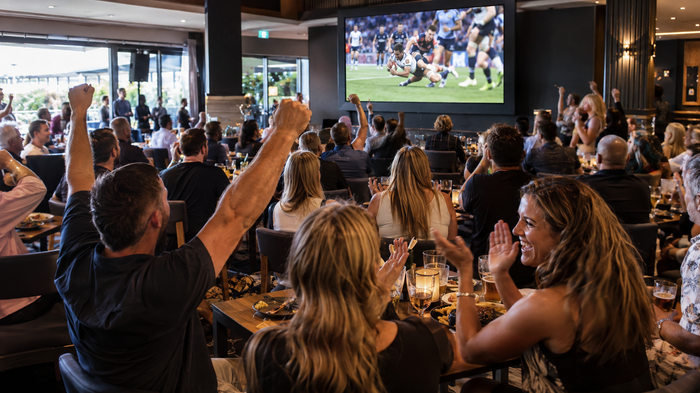
The record audience achieved during the 2026 NRL season shows how much demand major rugby league moments can generate.
For Australian clubs, that demand creates an opportunity.
Not simply to sell another ticket, but to bring members together, increase venue activity, support non-gaming revenue and create another reason for people to return.
Capturing that opportunity should not automatically mean creating more work for staff.
It means encouraging supporters to book earlier.
Recognising members before they reach the front desk.
Keeping walk-up sales connected to the event.
Moving queues faster.
Giving event teams better visibility.
And building an event workflow that can be used again after the final whistle.
Sticky Tickets’ event ticketing features bring online ticketing, member access, event-day sales and check-in tools together in one platform for Australian event organisers.
Because when the biggest game of the season arrives, your team should be focused on delivering the event — not fixing the queue.
Planning an NRL Finals watch party, member function or major club event?
Explore Sticky Tickets for Clubs & Associations and see how your club can simplify ticket sales, member access, walk-up payments and event-day check-in.
This ebook has seven of our favourite tried and tested methods for increasing ticket sales, and most of them don’t require a lot of work or expense on your part.