Are You Collecting Too Much Member Data? A Guide to Data Minimisation for Event Organisers

Every extra field on an event registration form can feel useful.
Mobile number? Maybe you’ll need it later.
Date of birth? Could be useful for audience insights.
Job title? Might help with segmentation.
Address? Perhaps there’s a future campaign you could use it for.
But there is a question Australian event organisers increasingly need to ask before adding another field:
Do we actually need this information to run the event?
That question sits at the heart of data minimisation in Australia – collecting only the personal information that is genuinely necessary for the purpose at hand.
And Australians are becoming increasingly clear about where they draw the line.
According to the OAIC’s 2026 Australian Community Attitudes to Privacy Survey, 92% of Australians believe there are some types of information organisations should never collect, regardless of the purpose.
At the same time, 66% say they are more comfortable with data collection when an organisation collects only the minimum information necessary.
For clubs, associations and event organisers handling member and attendee information, that makes data minimisation more than a compliance conversation.
It is also a trust conversation.
What Does Data Minimisation Mean in Australia?

Data minimisation is relatively straightforward in principle:
Collect what you genuinely need. Avoid collecting what you do not.
For organisations covered by the Australian Privacy Principles, APP 3 requires personal information to be reasonably necessary for the organisation’s functions or activities.
Updated OAIC guidance published in May 2026 goes further in explaining that proportionality is implicit in this requirement and that organisations should take a data minimisation approach, limiting collection to the minimum amount necessary in the circumstances.
The OAIC also makes an important distinction: information being helpful, desirable or convenient is not necessarily enough to make its collection reasonably necessary.
Organisers can review the full OAIC guidance on Australian Privacy Principle 3 for the requirements applying to the collection of solicited personal information.
For an event team, the practical version is much simpler:
If someone asked why you need a particular piece of attendee information, could you clearly explain the reason?
If not, it may be worth asking whether the field needs to be there at all.
Event Registration Forms Can Quietly Grow Over Time
Event registration forms rarely become complicated overnight.
More often, they grow one question at a time.
Someone asks for dietary requirements for one event.
Marketing adds an industry field for another.
Membership wants an identifier.
A sponsor wants demographic information.
The events team wants a mobile number “just in case”.
Eventually, a straightforward ticket purchase can turn into a long questionnaire.
The problem is not simply inconvenience for the attendee.
Every additional piece of personal information collected becomes another piece of information your organisation needs to appropriately manage.
That is one reason excessive collection matters.
The OAIC’s 2026 research found Australians were particularly likely to consider data practices unfair when the amount of information collected was disproportionate (70%) or could have been reduced (67%).
So before asking another question at checkout, consider whether the answer will genuinely be used to deliver or manage that particular event.
Start With the Purpose, Not the Field
Instead of beginning with “What information can we collect?”, start with:
“What do we need to accomplish?”
If you need to send the purchaser their tickets, an email address clearly serves a purpose.
If catering needs confirmed dietary requirements, that information may have a clear event-related reason.
If an event is restricted to particular members, some form of membership verification may be necessary.
But collecting information simply because it might become useful later deserves more scrutiny.
This is particularly relevant for clubs and associations, where event registration can overlap with existing membership data.
Where possible, organisers should consider whether information already held in an appropriate membership system can support the process rather than repeatedly asking members to provide unnecessary information.
Sticky Tickets, for example, supports membership integrations for clubs and associations that can recognise eligible members during booking and apply relevant ticket access or benefits.
The goal is not to eliminate useful data.
It is to make every field earn its place.
Five Questions to Ask Before Collecting Attendee Data
Before adding information to an event registration or checkout process, ask:
- Why do we need it? What specific part of the event or attendee experience requires this information?
- Will we actually use it? If nobody has a defined use for the information, reconsider collecting it.
- Could we achieve the same outcome with less information? A simpler field or existing data may be sufficient.
- Would the attendee reasonably expect us to ask for it? Unexpected questions can quickly undermine trust.
- How long do we need it? Collection should not be treated as permission to retain information indefinitely.
These questions are particularly useful when different departments contribute to event registration forms.
Marketing, events, membership and operations may each have valid objectives, but putting every possible data request into one checkout process does not necessarily create a better experience.
Data Minimisation Can Improve the Ticket-Buying Experience Too
Privacy is not the only reason to simplify registration.
Every unnecessary question adds another interaction between someone deciding to attend your event and completing their booking.
A cleaner registration experience can make the purpose of each question easier to understand and reduce the amount of work required from the attendee.
Sticky Tickets allows organisers to customise the information requested from attendees during checkout, including questions asked per order or per ticket.
That flexibility is useful — but flexibility should be used deliberately.
Rather than asking every attendee everything you might possibly want to know, configure event questions around what is genuinely relevant to that event.
For example, a conference may reasonably require different information from a community fundraiser, member dinner or live entertainment event.
The registration experience should reflect that difference.
Collecting Less Can Reduce the Impact When Something Goes Wrong
There is another practical reason not to accumulate unnecessary information.
The more personal information an organisation holds, the greater the potential impact if that information is exposed, accessed incorrectly or otherwise compromised.
The OAIC’s updated APP 3 guidance explicitly notes that over-collection can increase information-security risks and the potential harm resulting from a data breach.
Data minimisation therefore works alongside security controls.
Strong security asks:
How well are we protecting the information we hold?
Data minimisation asks an equally useful question:
Did we need to hold all of it in the first place?
For organisers evaluating event technology, both questions matter.
Sticky Tickets outlines how personal information is collected, used, secured and managed in its Privacy Policy, including information relating to Australian data centres, encryption, access controls and the handling of personal information that is no longer required.
Transparency Matters as Much as Collection
Australians do not necessarily object to organisations collecting personal information.
They want to understand why.
The 2026 OAIC survey found 69% were more accepting of data collection when the purpose was clear and specific, while 68% pointed to having the ability to opt in or consent.
That makes transparency part of good event design.
If you need to ask for information beyond basic booking details, explain why.
A simple, specific explanation is more useful than expecting attendees to guess how their information might be used.
It can also help event teams internally.
If nobody can write a clear sentence explaining why a particular field is required, that is a useful signal to reconsider it.
Data Should Help You Run Better Events – Not Simply Give You More Data

Event information can be extremely valuable.
Attendance patterns, ticket performance, check-in rates and other event insights can help organisers understand what happened and improve what they do next.
Sticky Tickets provides real-time reporting and event analytics, while organisers can also access and export relevant attendee and event reports before, during and after an event.
But better event intelligence does not mean collecting every possible detail about every attendee.
The more useful question is:
What information will help us run this event well, understand its performance and improve the next one?
Then collect around that purpose.
A Better Data Strategy Can Start With One Event
Data minimisation does not necessarily require a major privacy transformation.
Start with your next event registration form.
Look at every field.
Ask why it exists.
Remove what no longer has a clear purpose.
Review who needs access to the information that remains.
Make sure attendees understand why important information is being requested.
And review the systems holding that data — not just the form collecting it.
With 92% of Australians saying there are some types of information organisations should never collect, asking for less can be a meaningful way to demonstrate that your organisation takes member and attendee privacy seriously.
Because good event data strategy is not about collecting the most information.
It is about collecting the right information and having a clear reason for every piece of it.
Make Your Event Setup Work Smarter
Sticky Tickets gives Australian organisers flexible tools for ticketing, attendee management, reporting, event privacy and member access without making every event follow the same setup.
Explore Sticky Tickets event features and see how you can build an event registration process around what your event actually needs.
Start selling tickets with Sticky Tickets.
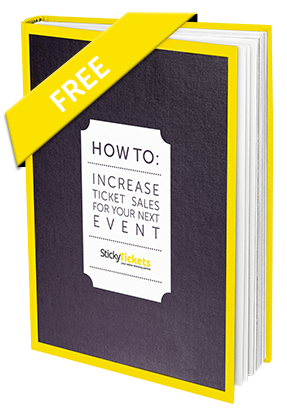
This ebook has seven of our favourite tried and tested methods for increasing ticket sales, and most of them don’t require a lot of work or expense on your part.
You might also like:
 AI and Member Data: What Did Your Club Just Share? October 27, 2026
 Are You Collecting Too Much Member Data? A Guide to Data Minimisation for Event Organisers September 25, 2026
 Is Your Data Private? November 20, 2019